Preparing for Tier 2
The Challenge
Nova Scotia is implementing tiered energy performance requirements under the 2020 National Building Code. Tier 2 took effect April 1, 2026. Tier 3 follows in April 2027. The project assessed stakeholder readiness, identified needs, and developed aids and training to assist in this transition.
Building to Zero Exchange (BTZx)—who drives the transition to net-zero buildings in Atlantic Canada—engaged Baseline Energy Analytics (BEA) and Reflective Consulting to lead a province-wide consultation and develop practical resources for the transition.
Province-Wide Consultation
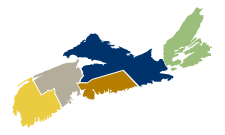
We designed and facilitated consultation sessions across all five Nova Scotia Building Officials Association (NSBOA) zones, reaching building officials, energy advisors, contractors, and policy stakeholders in every region of the province.
A consistent finding emerged across every session: contractors are already building close to Tier 2 standards, but don’t realize it. The gap isn’t technical — it’s communication and documentation.

“They need to be told they’re doing this stuff already, it’s not that hard… Tiers two and three are not a big challenge, they’re doing it already, and it scares away a lot of people if you say the opposite.”
Building officials told us they needed visual, diagram-based resources using trade language (R-values, not RSI), standardized province-wide so every zone gives builders the same guidance.
What We Built
Working directly from the consultation findings, we developed three job aids and a companion web tool — each designed to address specific needs identified by building officials.
Compliance Pathways
Side-by-side comparison of prescriptive and performance compliance paths. What documentation to collect, what to verify, when an Energy Advisor is needed.
Prescriptive Tier Compliance
Point system quick reference showing how to achieve 10 points (Tier 2) or 20 points (Tier 3). Common measure combinations, R-value/RSI translations, colour-coded by component.
Tier 2 Verification Guide
Inspection checklist linking permit-stage point selections to verification steps at each construction stage.
ECP Calculator
Interactive web tool for prescriptive compliance. Select building characteristics and upgrade packages to calculate Tier 2 point totals in real time.
Iterative Development
Each resource went through multiple rounds of review with building officials across the province before being finalized.
Nov–Dec 2025
Dec 2025
Jan 2026
Jan–Feb 2026
Mar 2026
Mar 2026
In March 2026, we delivered half-day training workshops across all five NSBOA zones, plus two dedicated sessions with First Nations communities. Building officials used the beta job aids and ECP Calculator during hands-on exercises, and their feedback was incorporated into the final v1.0 release.
Outcome
Nova Scotia’s building officials now have standardized, province-wide resources for enforcing tiered energy codes — resources they asked for, helped shape, and tested before Tier 2 takes effect. The project was funded by the Nova Scotia Department of Energy. The job aids and ECP Calculator are published by BTZx and freely available to the industry.
Published Resources
 ×
×